Translate

Tuesday, July 31, 2018

Modern History: Mauthausen Concentration Camp Memorial


Mauthausen Concentration Camp Background History

Photos and text in quotes are from displays at Mauthausen.

 September, 1937:  National Socialist Party rally at Nuremberg.
"At the heart of National Socialist ideology is the idea of the 'Volksgemeinschaft' (People's Community).  Only those people who correspond to  its racial ideal and derive from this a shared destiny can belong to it.  Staged mass events are intended to make this 'people's community' visible."
 "In contrast, political opponents, Jews, Sinti and Roma, homosexuals, Jehovah's Witnesses, and socially disadvantaged groups such as the unemployed and the homeless are discriminated against and persecuted."
"From the mid-1930's onwards ever more people became the victims of persecution.  The number of concentration camps such as Sachsenhausen and Buchenwald are established."


 March, 1939:  Entrance of the German Wehrmacht into Prague.
"Through occupation, resettlement and expulsion the National Socialists want to create a 'Great German Reich.'  In 1935 they reintroduce compulsory military service and shift the economy into war production.
"In 1935 the Saarland is reintegrated, followed by the 'Anschluss' (Annexation) of Austria into the German Reich in March 1938.  After the reincorporation of  the  Sudetenland in autumn 1938,the Wehrmacht (German Army) occupies the remaining Czechoslovakian territories in March 1939."
"Large numbers of people are deported from the occupied areas to concentration camps.  New camps such as Flossenburg, Mauthausen, and the Ravensbrueck women's concentration camp are established.  At the end of 1938 over 60,000 people  are imprisoned in the concentration camps."

  The poster below is publicity saying that the whole Austrian people should vote yes on April 10 (1938) to annex Austria to Germany.  Note that the vote took place a month after the German troops had already entered Austria.  There were reports of voter intimidation.


"Shortly after the 'Anschluss' (Annexation) of Austria to the German Reich, Mauthausen is chosen as the location of a concentration camp.  Political opponents and people categorized as 'criminal' or 'antisocial' are to be interned here and forced to carry out hard labour in the granite quarries."
"On August 8, 1938 the SS transfers the first prisoners from Dachau concentration camp.  The prisoners, who in this period are mostly German or Austrian, and all of whom are men, have to construct their own camp and set up quarry works.  Hunger, arbitrary treatment and violence characterize the prisoners' daily lives.  Some 500 prisoners die during the first eighteen months."


Below is a chart showing marks put on prisoners' uniforms.
Categories include:  Political Prisoners, Professional Criminal, Emigrant, Jehovah's Witness, Homosexual, Jews, Race Defiler, On Escape Watch, Pole, Czech, Member of the Wehrmacht.


"In the second half of the war the prisoners, including women for the first time, are increasingly deployed as workers in the arms industry and in the construction of underground factories."
"The SS sets up sub camps at various locations.  New arrivals are distributed to them from the main camp.  The total number of inmates rises to over 70,000 [at Mauthausen and related camps].  More and more, Mauthausen itself becomes a camp for the sick and weak to die in."
"Because the prisoners are now needed for their labour, living conditions improve temporarily.  However, the inhuman working conditions on the underground building projects soon push the death toll to new heights."

Below is a graphic showing the relative numbers of Mauthausen prisoners from different countries in white, and the number surviving in black.

The total number of prisoners in the Mauthausen complex from its establishment in August 1938 to the liberation in May 1945 was about 185,000.  Of these, about 93,000 survived. The largest number of those deported to Mauthausen came from Poland, followed by citizens of the Soviet Union and Hungary.  There were many Germans and lesser numbers from surrounding countries. 

Tourists Along the Austrian Danube

The Danube in Austria is an international tourist destination.

Lots of bikers and walkers, some  of whom are on the many tour cruise boats.
When they discharge hundreds of people, the small towns get so crowded that  it is hard to maneuver.


Tourists travel in large groups and love to sample Austrian fare and wines, especially in the Wachau Valley between Krems and Melk.  Below, Chinese tourists in Melk enjoying some sort of roast pig.


The Danube Bikeway is the second most popular long distance route in Europe.
/

Alan on Bike Along the Danube July 2018


A Breakfast and Dinner in Austria

The most important meal was breakfast, often included with lodging.
Here is Maria Elisabeth of Gaestehaus Donautal in Kasten.


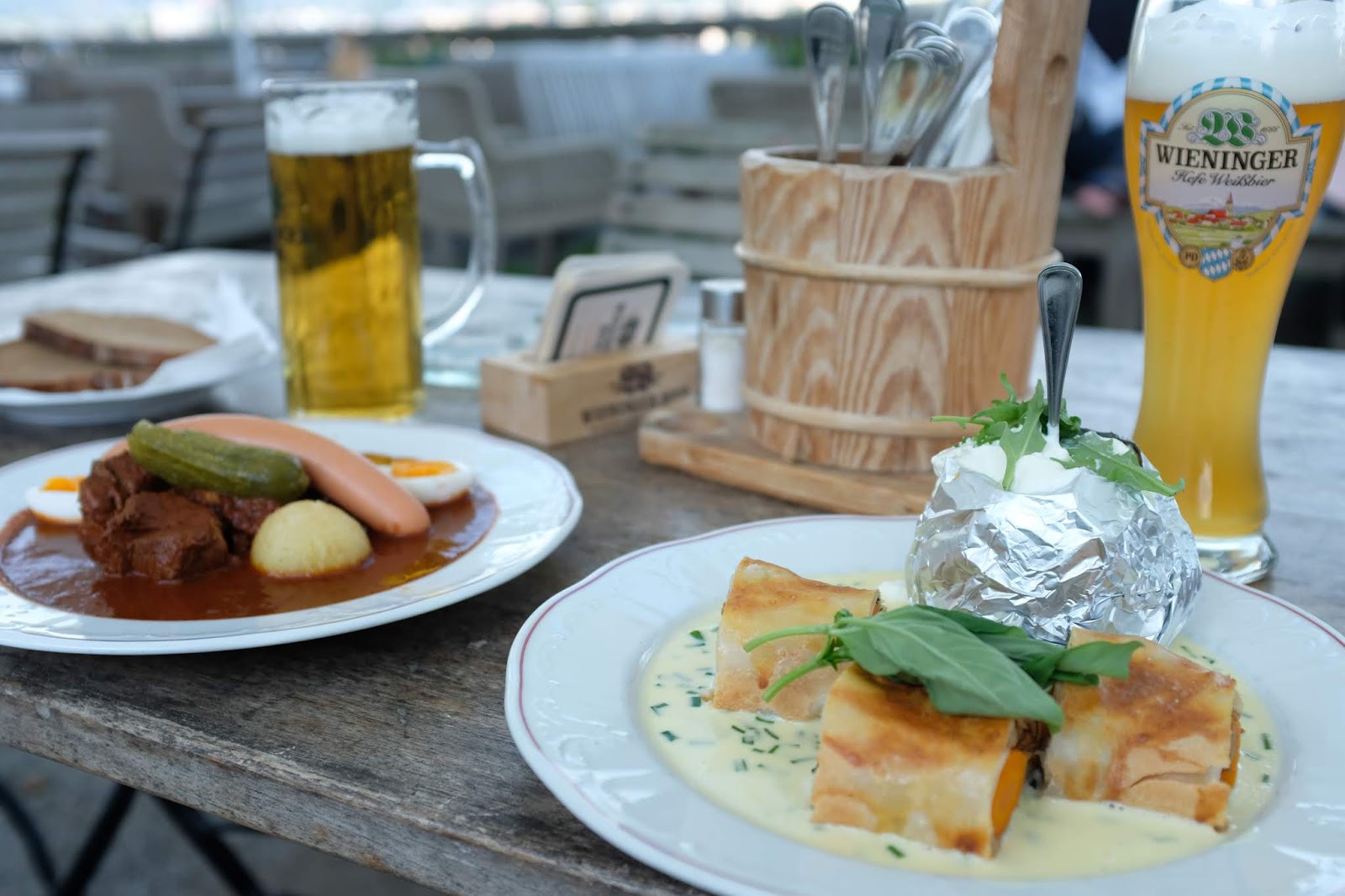
In Salzburg, at the end of the trip, we actually had dinner out at the Stadtalm Naturefreundehaus, high above the city.


Salzburg; July 12, 2018


We were lucky to have one night in Salzburg and managed to stay at the hostel Stadtalm Naturefreundehaus, on the Moenchsberg mountain above the city.

The window of our room, below, shows the Festung Hohensalzburg in the distance.


Salzburg was below us.


The Festung fort beckoned after dinner.


The Hohensalzburg Fortress is one of the largest and best preserved castles in Europe.


Despite being the seat of the prince archbishops  of Salzburg, it is extremely heavily fortified and prepared for war.


Museum für Gestaltung, Zürich

The Museum fuer Gestaltung  or Museum of Design has collections of posters, graphics, design and applied art, as well as temporary exhibitions.


The 1935 building was just renovated and updated, above.
Below, three pictures show:  
furnishings from 1930's,
Swiss designed 'stuff,' including railroad clock still in use,
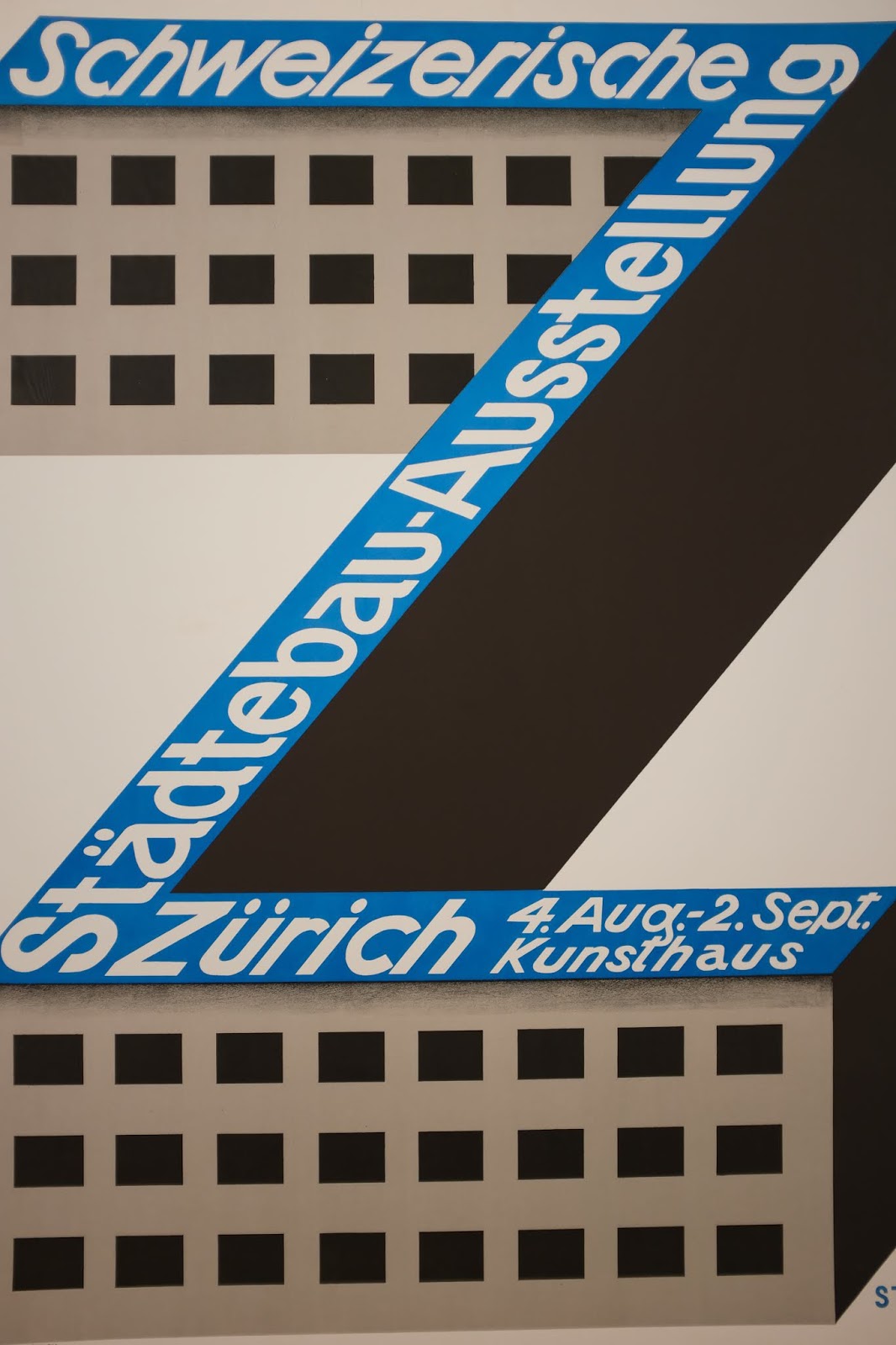
poster from Zurich Art Museum show of urban building in the 1940's.


Below, creations from temporary exhibition by Swiss designers of atelier oi.


Chanticleer; April 2018


Winter and Spring, 2018


Spring Reseeding of Front Lawn:  April, May and June


Fallingwater; April 2018


The story of Edgar Kaufman Sr and Frank Lloyd Wright is told in a fascinating book:  Fallingwater Rising.

Fallingwater is in western Pennsylvania and is run the Western PA Conservancy.


Below is installation of Polymath Park house, designed by Wright or one of his students.
Polymath Park is a collection of  small houses designed by Wright or one of his students.
It is located near the Ligonier exit of I76 just north of Fallingwater.
Houses are available for rent and there is a small restaurant.
https://www.franklloydwrightovernight.net